

Table of Contents
- The Real Reasons Anglers Choose Preowned Fly Fishing Gear
- How to Inspect Used Fly Rods Before You Commit
- Reel Drag Systems, Serial Numbers, and Counterfeit Detection
- Best Vintage Fly Fishing Brands Worth Hunting For
-
What Gear to Avoid Buying Used
- Waders and Wading Boots: The Hidden Failure Points
- Fly Lines: Short Lifespan, Hard to Assess
- Rods with Tip Damage: Why Repairs Rarely Restore Action
- Reels with Discontinued Drag Components
- Anything Sold Without Clear Photos of the Actual Item
- Sanitization and Hygiene Protocols for Second-Hand Tackle
- Fly Fishing Gear Maintenance Tips After the Sale
- Where to Find Reputable Used Gear, Trade-Ins, and Shipping Safely
- Frequently Asked Questions
Last Updated: September 30, 2026
The Real Reasons Anglers Choose Preowned Fly Fishing Gear
Walk into any fly shop and you'll hear the same argument: new gear is safer. Anglers who've fished for decades know better. Buying preowned fly fishing gear is how experienced hands build a serious quiver without paying full retail, and how they get rods and reels manufacturers no longer make.
Cost Savings That Fund a Bigger Quiver
A new premium fly reel can cost as much as three carefully chosen pre-owned ones. Buying pre-owned spreads the same budget across more gear.

Depreciation Curves: Where the Value Actually Sits
Fly fishing gear depreciates fastest in its first two years, then flattens out. A rod or reel fished a season or two has absorbed the steepest drop, so the next owner buys near the bottom of the curve.
How to Inspect Used Fly Rods Before You Commit
Inspecting used fly rods takes about fifteen minutes and a flashlight. Run your thumb and forefinger along every inch of the blank, flex each section gently, and check ferrules and guides before discussing price.
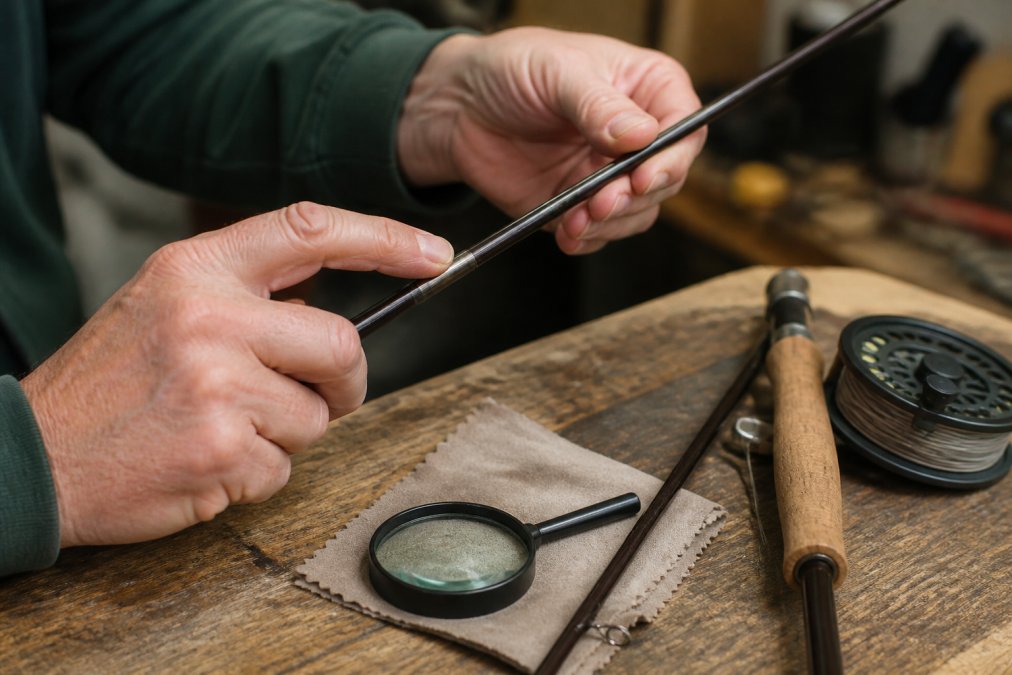
Checking the Fly Rod Blank, Ferrules, and Guide Inserts
Start with the blank. Hairline cracks, cloudy patches, or a crunching sound when you flex mean the blank is compromised, and no discount justifies that risk. Ferrules should seat fully with a firm twist and no wobble.
Cork Handle Wear and Rod Tip Damage
Cork tells you how hard a rod has been fished. Light discoloration and minor filling are cosmetic; deep gouges, missing chunks, or a sanded-down handle signal heavy use and are a bargaining lever.
Reel Drag Systems, Serial Numbers, and Counterfeit Detection
Counterfeit fly reels exist, and they're getting better. Verify authenticity by checking the serial number against manufacturer records, examining machining quality on the frame and spool edges, and confirming the drag knob, logo engraving, and finish match known production runs.
Testing a Reel Drag System and Fly Line Condition
Spin the spool and listen. You want a smooth, consistent drag with no grinding or dead spots. Test the full adjustment range, from free spool to maximum, and check that it releases line evenly under load.
Best Vintage Fly Fishing Brands Worth Hunting For
Certain vintage names hold their value because they were engineered to a standard current mass production rarely matches. But "vintage" is not a synonym for "valuable." The difference between a collectible and a curiosity comes down to three things: documented drag systems, parts availability, and a following among anglers who actually fish the gear.
Brands That Hold Value (and Why)
A few names come up again and again because their engineering and parts support have stood the test of time:
- Hardy, British-made reels from the classic lineups (Perfect, St. George, LRH) are the benchmark for vintage value. Their click-and-pawl and disc drag systems are simple, serviceable, and still supported by aftermarket parts. A Hardy reel that has been fished hard but maintained will often sell for more than it did new.
- Abel, Early American large-arbor designs, particularly the Abel Big Game and Super series, hold value because the drag systems are sealed, the machining is exceptional, and the company still services older reels. A pre-owned Abel is one of the few reels where "buy used" carries almost no risk.
- Orvis, The CFO and Battenkill series are the classic examples. Orvis has a long history of supporting older reels with parts and service, which keeps resale values stable. The Mid Arbor series is a more recent example of a reel that depreciates slowly because it is still in demand.
- Scientific Anglers, The System 1 and System 2 reels, particularly British-made examples, have a cult following. Their disc drags are simple and robust, and the leather cases and original packaging add collector value.
- Ross, The Gunnison and San Miguel series are the standouts. Ross reels from the 1990s and early 2000s are known for their smooth drags and American machining, and they have a dedicated following that keeps prices firm.
Depreciation Curves: Which Brands Lose Value Fastest
Not all premium gear holds value. The steepest depreciation hits mass-produced current models from large manufacturers, especially those with frequent model-year updates.

Counterfeit Detection: Spotting Fake High-End Rods and Reels
Counterfeit fly reels exist, and they are getting better. High-end rods are also frequently counterfeited. The tells are in the details:
- Serial numbers, Verify the serial number against the manufacturer's records where available. Legitimate sellers photograph it without hesitation. Reluctance to show a serial number is the single biggest red flag in the pre-owned market.
- Machining quality, Examine the frame and spool edges. Counterfeits often have tool marks, inconsistent anodizing, or sloppy lettering. The logo engraving should be crisp and match known production runs.
- Weight and feel, A counterfeit rod often feels tip-heavy or has a different flex profile than the genuine article. If you have access to a known-good example, compare side by side.
- Finish consistency, Inconsistent anodizing, paint runs, or a finish that does not match the manufacturer's catalog photos are common tells.
- Packaging and documentation, Original tubes, socks, and paperwork add value and are harder to fake convincingly. A rod sold without its original tube at a suspiciously low price deserves extra scrutiny.
What Separates a Collectible from a Curiosity
The rule is simple: if the manufacturer still supports the product with parts and service, the gear will always find a buyer. A no-name import with no parts support and no following is a curiosity, not an investment.
What Gear to Avoid Buying Used
Some categories simply do not survive the second-hand market well. The reasons are mechanical, not cosmetic, and understanding them will save you from a purchase that looks like a bargain until you're standing in cold water.
Waders and Wading Boots: The Hidden Failure Points
Waders and wading boots top the avoid list. Seams, booties, and soles degrade in ways that aren't visible until they fail. A wader that looks fine on a hanger may have micro-delamination in the seam tape or a bootie that's lost its waterproof membrane.
Fly Lines: Short Lifespan, Hard to Assess
A fly line has a finite lifespan, and the signs of failure, cracking, stickiness, memory coils that stay kinked after stretching, aren't always obvious in a photo. A line stored in a hot car or exposed to UV degrades faster than one kept cool and dark.
Rods with Tip Damage: Why Repairs Rarely Restore Action
Avoid rods with any tip damage. The tip section is the most stressed part of the rod, and a repair, a new tip-top guide or a splint, rarely restores original action. A rod stressed at the tip often feels soft or has a different flex profile.
Reels with Discontinued Drag Components
Avoid reels with discontinued drag components. Before buying any used reel, check whether drag washers, springs, and seals are still available.
Anything Sold Without Clear Photos of the Actual Item
Any listing using stock photography for a single used item is hiding something. Legitimate sellers photograph the actual item, flaws included.
Sanitization and Hygiene Protocols for Second-Hand Tackle
Second-hand tackle can carry aquatic invasive species, so hygiene matters more than most buyers realize. Any gear that's been in the water can transport microscopic organisms between watersheds. Clean and dry everything thoroughly before its first trip.
| Gear Type | Buy Used? | Why |
|---|---|---|
| Fly rods (no tip damage) | Yes | Holds value, easy to inspect |
| Fly reels (major brands) | Yes | Drag systems are testable |
| Vintage reels | Yes | Often appreciate in value |
| Waders and boots | No | Hidden seam and sole failure |
| Fly lines | Rarely | Short lifespan, hard to assess |
| Rods with tip damage | No | Repairs rarely restore action |
| Reels with discontinued drag parts | No | Unserviceable, parts unavailable |
Fly Fishing Gear Maintenance Tips After the Sale
Fly fishing gear maintenance tips matter most in the first week after a pre-owned purchase. Strip the reel, clean and re-grease the drag, and replace any line that shows cracking. A used rod benefits from a wiped-down blank and ferrule wax.
Sanitization and Hygiene Protocols for Second-Hand Tackle
For reels and rods, wipe down all surfaces with a mild disinfectant solution and let them dry completely. For anything that contacts water directly, follow your local regulations on gear decontamination, which some jurisdictions require by law. When in doubt, a full dry-out of at least 48 hours kills most aquatic hitchhikers.
Where to Find Reputable Used Gear, Trade-Ins, and Shipping Safely
Trade-in programs are worth understanding too. Many shops accept quality gear against new purchases, keeping usable tackle in circulation.
Frequently Asked Questions
Is it worth buying used fly fishing rods and reels?
For most anglers, yes. Preowned fly fishing gear lets you fish proven designs at a fraction of new pricing, and quality reels like the Orvis Mid Arbor III often hold their performance for decades. The catch is inspection: check the rod blank for cracks, test the reel drag system, and confirm guide inserts are intact. Buy from sellers who inspect inventory and describe condition honestly, and the savings outweigh the risk.
What should I look for when inspecting preowned fly fishing gear?
Start with the rod: run your thumb along the blank for cracks or delamination, check ferrule fit, and inspect guide inserts for grooves. On reels, test the drag system through its full range, look for frame cracks, and verify the serial number matches the model. Check cork handle wear for deep pits, and examine fly line condition for cracking.
How does buying preowned gear support sustainable angling?
Every preowned rod or reel kept in circulation is one less manufactured new, which reduces raw material demand and shipping emissions. It also keeps usable tackle out of landfill. There is a hygiene angle too: gear that moves between watersheds can carry aquatic invasive species, so clean and dry everything before its first trip. Buying second-hand is cost-effective angling and a lower-impact choice at once.
Where can I find reliable preowned fly fishing equipment?
Specialist resellers who inspect and grade each item beat anonymous marketplace listings. Look for sellers who publish condition notes, photograph actual inventory, and stand behind what they ship. Trade-in programs at established shops are another route, since they vet gear before resale. If you want vintage pieces with documented condition, a curated pre-owned inventory is the safest starting point.