

Table of Contents
- Start With the Angler, Not the Price Tag
- Best Fly Fishing Accessories for Gifts Under $100
- How to Buy a Fly Fishing Rod as a Gift Without Getting It Wrong
- Fly Fishing Gift Guide for Beginners: What Actually Gets Used
- Meaningful Outdoor Gifts for Lung Transplant Recipients
- What to Ignore When Choosing Fly Fishing Gifts
- Frequently Asked Questions
Last Updated: October 1, 2026
Start With the Angler, Not the Price Tag
Learning how to choose fly fishing gifts comes down to one principle: buy for the angler in front of you, not the shelf you're standing in front of. The difference is rarely budget, it's whether the gift matches how, where, and how often that person actually fishes. This guide covers the decisions that matter, from experience level to water type, plus specific gear picks at sensible prices.
Match the Gift to Experience Level
Beginners benefit most from complete, ready-to-use kits because they haven't formed preferences yet. Experienced anglers usually want consumables (flies, leaders, tippet) or upgrades to gear they already trust.
Read the Water They Fish
Where someone fishes shapes what they need more than any other factor. A tailwater trout angler, a warmwater bass chaser, and a saltwater flats regular carry entirely different kits.
Best Fly Fishing Accessories for Gifts Under $100
The best fly fishing accessories for gifts are the ones an angler would buy again after losing them, lanyards, fly boxes, and rod protection top the list. This price band is the gifting sweet spot: meaningful without obligation.
| Gift | Price | Best For | Why It Works |
|---|---|---|---|
| Fisherman's Lanyard | $55.00 | Anyone who wades | Keeps tools and sunscreen close; handmade by transplant recipients |
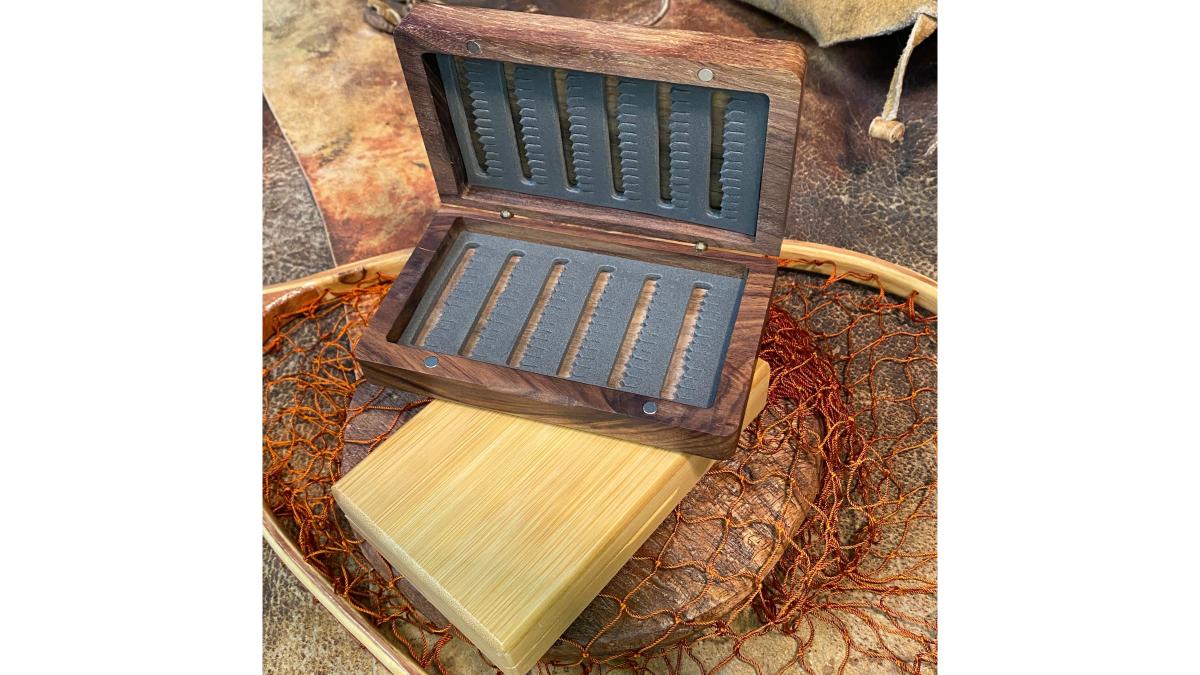
| Handcrafted Wooden Fly Box | $29.99 | Traditionalists | Walnut or bamboo finish; fits a vest pocket |
| Classic Reel | $89.99 | Anglers upgrading | CNC-machined aluminum; anodized, corrosion-resistant |
| Premium Rod Tube | $55.99 | Travelers | Fits most 4-piece rods up to 9 feet; padded interior |
| Fly Box Starter Set | $99.99 | Beginners | 120 flies in proven patterns; no guesswork |
How to Buy a Fly Fishing Rod as a Gift Without Getting It Wrong
The safe way to buy a fly fishing rod as a gift is to know the exact rod the recipient wants, or to buy a rod tube instead and let them choose. Weight, length, and action all interact with the water and casting style, and a mismatch is expensive to fix.


The Three Numbers That Decide Everything
A fly rod is defined by three specifications, and getting any one wrong makes the rod a poor fit:
- Line weight (the "weight" of the rod): a 4-weight, 5-weight, or 6-weight is the most common trout range. Lighter weights (2-4) cast small flies delicately on small streams. Mid weights (5-6) are the all-around choice for most trout water. Heavier weights (7-9) handle bass, saltwater, and windy conditions.
- Length: 8 to 9 feet is standard for streams. Shorter rods (7 to 7.5 feet) work better in tight brush. Longer rods (9.5 to 10 feet) help with line control on larger rivers and stillwater.
- Action: fast-action rods bend mostly in the tip and reward a crisp casting stroke. Moderate-action rods bend deeper and are more forgiving for beginners and for delicate presentations.
How Water Type Shapes the Choice
Where someone fishes narrows the rod choice more than any other factor:
- Small-stream trout: 7 to 8.5 feet, 3- to 4-weight, moderate action. Short casts, tight cover, small flies.
- General trout rivers: 8.5 to 9 feet, 5-weight, moderate to fast action. The most versatile setup.
- Stillwater and bass: 9 feet, 6- to 7-weight, fast action. Casts larger flies and fights wind.
- Saltwater flats: 9 feet, 7- to 9-weight, fast action. Corrosion-resistant hardware is essential.
The Step-by-Step Buying Sequence
- Confirm the line weight they fish most, typically a 4, 5, or 6 for trout
- Ask whether they prefer a fast or moderate action
- Check the length they currently use, usually 8 to 9 feet for streams
- Buy from a shop with a clear return policy, and keep the receipt
- Pair it with a rod tube so the gift protects the investment
Fly Fishing Gift Guide for Beginners: What Actually Gets Used
Beginners get the most value from gear that removes decisions. A new angler doesn't need a second rod, they need flies, a way to carry them, and a reel that won't fight them.
Three categories consistently earn their place:
- Flies in proven patterns: beginners lose flies constantly, so quantity and variety matter more than rarity
- A practical fly box: organization saves time on the water and protects the flies between trips
- A forgiving reel: smooth drag and easy maintenance beat features a beginner won't use
What a Beginner Kit Should Actually Contain
A useful beginner gift isn't a single item, it's a small system covering four jobs: carrying flies, carrying tools, attaching tippet, and landing fish. Cover only one and the recipient still has to buy the other three.
A practical starter set usually includes:
- A fly box with 100+ flies spanning dry flies, nymphs, wet flies, and streamers, so the beginner can match whatever is hatching or moving
- A lanyard or small chest pack to hold nippers, forceps, floatant, and tippet without requiring a vest
- Two or three tippet spools in common sizes (5X, 6X) and a few tapered leaders
- A net with a rubber or silicone bag, rubber is gentler on fish and doesn't tangle hooks the way nylon does
- A basic nipper and forceps, the two tools beginners reach for most
Sizing and Pattern Specifics That Matter
Beginners don't need rare patterns; they need patterns that work in their local water. Gift a box organized by category: dry flies for surface feeding, nymphs for subsurface, streamers for moving fish. If you know their water, bias the box toward it, small-stream trout anglers use more dry flies and small nymphs, while stillwater and bass anglers use more streamers and larger nymphs.
TRCCo. Fly Box with Flies - Complete →
The Reel: What Beginners Actually Need
A beginner reel needs three things: smooth drag, easy maintenance, and corrosion resistance. Sealed drags and large arbor designs are nice, but a beginner won't notice until they've fished a full season. What they will notice is a reel that dries quickly and doesn't seize up.
What to Skip for Beginners
Avoid anything that assumes preferences they haven't formed. A second rod, a specialized saltwater reel, or a premium fly line in a weight they don't fish all sit unused. The same goes for tying kits, fly tying is a separate hobby, and a beginner is unlikely to start tying before they've learned to cast.
Meaningful Outdoor Gifts for Lung Transplant Recipients
Meaningful outdoor gifts for lung transplant recipients work best when they lower the effort required to be outside rather than adding gear to manage. Recovery changes stamina, so the most thoughtful gifts are light, simple, and easy to use on a shorter outing.
For anyone rebuilding strength after transplant, prioritize:
- Gear that's light and compact enough to carry without a full vest
- Accessories that reduce bending, reaching, and fiddling
- Items with a story, because purpose often motivates the trip itself
What to Ignore When Choosing Fly Fishing Gifts
Ignore anything that requires the recipient to change how they fish. Novelty gadgets, oversized tackle systems, and "all-in-one" kits full of gear they already own tend to sit unused.
A few specific things to skip:
- Rods and reels bought blind. Without knowing weight and action, you're guessing with someone else's money.
- Cheap tools that fail on the water. A discount nipper or worn-out line costs the recipient a fish.
- Duplicates of core gear. Most anglers already own two of whatever you're about to buy.
- Anything that needs assembly or a learning curve. Gifts should reduce friction, not add it.
Frequently Asked Questions
What are the best fly fishing gifts for beginners?
Beginners do best with gear that removes guesswork. A loaded fly box with proven patterns covers trout, bass, and panfish without requiring the recipient to know what to buy. Pair it with a lightweight reel and a small tool lanyard. Skip anything requiring advanced technique, like a specialized spey rod or a complex tying kit. The goal is to get them on the water with working gear on day one.
How do I know what size fly fishing gear to buy as a gift?
Ask two questions: what species do they chase, and what rod weight do they already own? A 5-weight covers most trout streams, while an 8-weight suits bass and saltwater. For reels, match the reel to the rod weight rather than buying oversized. For fly boxes, a compact 5.5 x 3.5 inch wooden box fits a vest pocket and holds a season's worth of essential patterns without adding bulk.
Are vintage fly fishing rods good gifts?
Vintage rods appeal to experienced anglers who value craftsmanship and history, but they carry risk for beginners. Condition matters more than age. A rod that casts well and has intact guides, ferrules, and cork is a genuine gift; one with hidden cracks is a headache. If the recipient has 20 or more years on the water, a well-documented vintage rod can mean more than anything new.
What are some unique fly fishing accessories for experienced anglers?
Experienced anglers already own the basics, so focus on items they would not buy themselves. A handcrafted wooden fly box in black walnut or bamboo offers something mass-produced gear cannot. A premium rod tube with aluminum fittings protects a rod they have owned for years. A handmade lanyard keeps tools and sunscreen close while wading. These pieces carry a story, which matters more than another plastic gadget.
How can I choose a gift that supports a good cause?
Look for items where the charitable link is built into the product, not bolted on as marketing. A handmade fisherman's lanyard crafted by transplant recipients, with all proceeds benefiting the Second Season Foundation, is one example. The purchase does two things at once: it equips an angler and it funds outdoor activities for lung transplant recipients. Ask the seller how the donation works before you buy.
What are the essential fly fishing tools every angler needs?
Every fly angler needs nippers, forceps, floatant, split shot, tippet spools, and a small drying patch. A lanyard keeps these within reach while wading, which is why it makes a practical gift. Beyond tools, a fly box with a solid selection of dry flies, nymphs, and streamers covers most conditions. A rod tube protects the rod when traveling. These items get used on every trip, unlike novelty gear that sits in a drawer.