

Table of Contents
- Essential Fly Fishing Gear for Guided Trips
- Understanding Rod Weights and Line Selection
- Wading Gear and Safety Essentials
- Your Fly Fishing Packing List for Success
- Essential Fly Fishing Accessories and Tools
- Fly Fishing Guide Etiquette and Preparation
- Fisherman's Netting and Landing Techniques
- Gear Maintenance and Longevity
- Frequently Asked Questions
Last Updated: September 27, 2026
Essential Fly Fishing Gear for Guided Trips
A guided fly fishing trip demands more than just a rod and hope, it demands proper fly fishing guide gear. You're investing in an experience with a professional who expects you to show up prepared, and the gear you bring directly affects your success on the water. The difference between a frustrating day and a memorable one often comes down to having the right equipment in your hands when you need it.
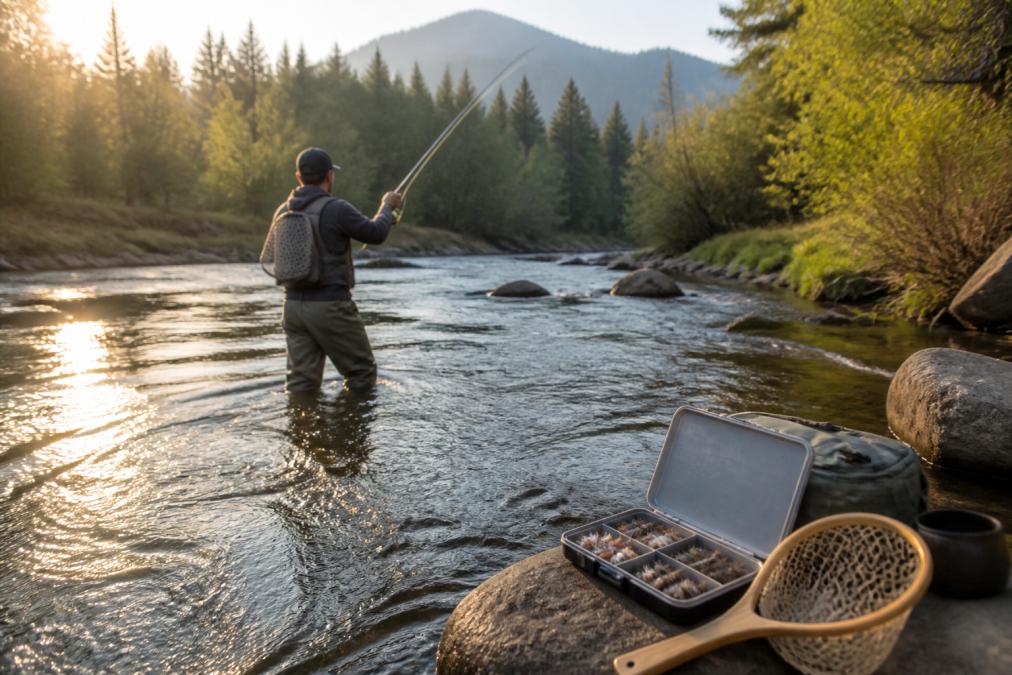
Your guide will handle the navigation and fish-finding, but you're responsible for the tools that connect you to the fish. This means understanding what constitutes essential fly fishing gear and why each piece matters. The basics, rod, reel, line, leader, and flies, form the foundation. Everything else amplifies your effectiveness or prevents costly mistakes.
The Reeling Church Co. recognizes that building a complete fly fishing setup shouldn't require guesswork. Whether you're starting fresh or filling gaps in your existing kit, quality gear makes the learning curve less steep and the fishing more enjoyable. A well-organized fly fishing packing list ensures you won't waste time streamside hunting for tools or improvising solutions.
Understanding Rod Weights and Line Selection
Your fly rod weight determines what you can cast effectively and what fish you can realistically land. Rod weights range from 1-weight (ultralight, for panfish) to 12-weight and beyond (for saltwater and large game fish). Most guided trips target trout, which means you'll typically use 4-weight through 6-weight rods. A 5-weight rod is the industry standard for freshwater work, it handles most trout sizes, casts in variable wind, and forgives casting imperfections.
The fly line weight must match your rod weight. A weight-forward line is the standard choice for guided trips because it casts farther and turns over larger flies more easily than other line profiles. The line sits on top of the water (floating), sinks in stages (intermediate), or drops fast (sinking), depending on the conditions your guide anticipates. Most guides recommend starting with a floating line and adding a sinking line only after you understand your home water.
Leader and tippet are the invisible connection between your fly line and the fly. A tapered leader (typically 7.5 to 9 feet) gradually reduces in diameter, which helps transfer the energy of your cast to the fly. Tippet is the thinnest section at the end, usually 2X to 5X, where you tie your fly. Thinner tippet (higher numbers) allows smaller flies to move more naturally but breaks more easily. Thicker tippet (lower numbers) holds larger flies and stronger fish but looks less natural to wary trout.
Wading Gear and Safety Essentials
Wading gear protects you from cold water and sharp streambed rocks while keeping you stable in moving current. Chest waders are the standard, they extend from your feet to your chest and are typically made of neoprene (warmer but bulkier) or breathable fabric (lighter and more packable). For most guided trips in spring through fall, breathable waders work well. Winter trips demand neoprene.
Wading boots must have a felt sole or rubber sole with studs for traction on slippery rocks. Felt soles grip moss and algae better, but many rivers now require rubber to prevent spreading invasive species. Check your guide's recommendations for your specific water. A wading belt cinches around your waist and prevents water from rushing into your waders if you slip, this single piece of gear has saved countless anglers from hypothermia.
A wading staff provides stability in deep or fast water. It's not required for shallow, slow streams, but it becomes essential when wading above your knees or crossing current. The staff extends from your armpit to the streambed and lets you feel for drop-offs before stepping into them. Many guides recommend carrying one even if you don't plan to use it, the moment you need it is the moment you realize you should have brought it.
Polarized sunglasses let you see beneath the surface glare and spot fish before they spot you. They're essential, not optional. Your glasses should have side protection and secure straps so they don't end up in the river. The color of the lens matters: amber or copper lenses work best in low light or overcast conditions, while gray lenses cut glare in bright sun.
Your Fly Fishing Packing List for Success
Preparation separates confident anglers from those who spend the day improvising. A fly fishing packing list for a guided trip should include everything your guide might ask for and nothing you'll regret carrying. Here's what belongs in your pack:
Core Tackle:
TRCCo. Fly Box with Flies - Complete →
- Fly box with assorted patterns (dry flies, nymphs, streamers, and emergers)
- Extra spools of tippet in multiple sizes (3X, 4X, 5X)
- Spare flies, bring more than you think you'll need
- Strike indicators for nymph fishing
- Split shot and other weight for depth control
- Floatant for dry flies
- Fly line cleaner and cloth
Safety and Comfort:
- Sunscreen (reapply every 2 hours)
- Insect repellent
- Water bottle (hydration matters more than most anglers realize)
- Snacks with protein and carbs
- Headlamp or flashlight if the trip extends into low light
- First aid kit with blister treatment
- Hat with a wide brim
Tools and Accessories:
- Nippers for cutting tippet (The Reeling Church Co.'s Fishing Clippers feature hand-painted fish designs and razor-sharp stainless steel blades, they're as functional as they are beautiful)
- Forceps for removing hooks safely
- Thermometer to check water temperature
- Measuring tape for recording fish size
- Notebook and pencil for tracking what worked
The Reeling Church Co. offers the TRCCo. Fly Box with Flies - Complete Starter Set at $99.99, a two-sided box loaded with 120 hand-selected flies covering trout, bass, and panfish. It removes the guesswork from fly selection and gives you a proven starting point.


| Item | Purpose | Priority |
|---|---|---|
| Fly box with flies | Core fishing tool | Essential |
| Tippet spools | Connection to fly | Essential |
| Nippers | Cut tippet cleanly | Essential |
| Strike indicator | Detect nymph takes | High |
| Thermometer | Predict fish activity | Medium |
| Floatant | Keep dry flies floating | Medium |
| Sunscreen | Prevent burn | High |
Essential Fly Fishing Accessories and Tools
Beyond the basics, certain fly fishing guide gear accessories make the difference between a good day and a great one. Forceps (also called hemostats) let you remove hooks from fish mouths safely without crushing their jaws. They're also useful for cutting tippet in a pinch, though nippers do this job better. A landing net with a rubberized bag protects fish and makes them easier to handle. Soft mesh prevents scales from rubbing off.
A fly fishing vest or chest pack keeps your most-used gear within arm's reach. Vests are traditional and offer more pocket space, while sling packs are lighter and less restrictive.
Fly Fishing Guide Etiquette and Preparation
Your guide has invested years learning the water, building relationships with landowners, and developing a reputation. Respecting that investment means showing up on time, following instructions without argument, and treating the resource with care. Arrive 15 minutes early so your guide can rig your rod and brief you on the day's plan without rushing.
Fisherman's Netting and Landing Techniques
Landing a fish cleanly requires coordination between you and your guide. The landing net isn't just for show, it prevents exhausted fish from thrashing free at the last moment and protects their fins and scales. Your guide will usually handle the net, but understanding the process helps you position the fish correctly.
Gear Maintenance and Longevity
Quality fly fishing gear lasts decades with proper care. Your rod and reel are investments that will outlive you if you treat them right. Rinse all gear with fresh water after every trip, especially if you've fished salt water or heavily silted streams. Salt and silt corrode metal components and degrade line coatings.
Frequently Asked Questions
What should I bring on a guided fly fishing trip if I don't have my own gear?
Most guides provide rods, reels, and waders, but bring your own fly fishing packing list items: polarized sunglasses, sunscreen, a hat, water bottle, and personal medications. Confirm with your guide what they supply. Many anglers prefer their own fly box with proven patterns for the specific river. Check your guide's recommendations for local fly selections before the trip.
What's the difference between essential fly fishing accessories and nice-to-have gear?
Essential fly fishing accessories include nippers for cutting tippet, forceps for hook removal, a landing net, and a fly box with assorted patterns. Nice-to-have items are strike indicators, split shot, floatant, and a wading staff. Start with essentials, they directly affect your ability to catch and land fish. Accessories enhance efficiency and comfort but aren't critical for success on your first guided trip.
How do I maintain vintage fly fishing gear between trips?
Rinse your rod, reel, and waders with fresh water after each use, especially in saltwater. Store rods in a rod tube horizontally to prevent warping. Keep your fly reel's drag system clean and lightly oiled. Dry your waders completely before storage to prevent mildew. Check your leader and tippet for fraying and replace as needed. Inspect backing and fly line for damage. Proper maintenance extends gear life and ensures reliable performance on every outing.
What fly fishing guide etiquette should I follow on a guided trip?
Arrive on time, follow your guide's casting instructions, and ask before wading into new areas. Stay quiet when approaching fish and avoid false casting over productive water. Respect other anglers' space and the river environment. Ask permission before photographing other guides' clients. Thank your guide and tip appropriately. Return borrowed gear in the condition you received it. Good guide etiquette builds relationships and ensures better future trips.