

Table of Contents
- What Makes an Antique Fly Rod Worth Collecting
- Identifying Old Fly Rod Markings and Manufacturer Details
- Determining the Age of Your Antique Fly Rod
- Vintage Bamboo Fly Rod Value and Appraisal
- How to Restore Antique Fly Rods Properly
- Condition Assessment and Hidden Damage Signs
- Building Your Antique Fly Rod Collection
- Frequently Asked Questions
Last Updated: September 28, 2026
What Makes an Antique Fly Rod Worth Collecting
An antique fly rod is a tangible piece of angling history that connects you to decades of craftsmanship and tradition. Collectors are drawn to antique fly rods for their superior construction, distinctive aesthetic appeal, and the stories they carry. These rods were built when split bamboo and early graphite designs dominated the market, before mass production standardized every aspect of modern tackle.

An antique fly rod's value depends on three factors: construction quality, maker provenance, and condition. Rods built by Hardy, Leonard, or Payne command premium prices because their builders understood taper design and cane selection. A vintage bamboo fly rod from the early-to-mid 20th century often outperforms newer budget graphite alternatives, thanks to meticulous hand-wrapping and careful varnish application.
Collectors also value antique fly rods because they represent sustainable fishing. Acquiring a well-maintained vintage rod extends the lifecycle of quality equipment and supports environmental consciousness.
Identifying Old Fly Rod Markings and Manufacturer Details
Maker marks, serial numbers, and construction details stamped into the rod blank, reel seat, or cork grip reveal the rod's origin, age, and value.
Reading Serial Numbers and Maker Marks
The maker mark is your most reliable identifier. Hardy Brothers used a distinctive three-line mark with their name and location. Leonard rods typically display "H.L. Leonard" or "Bangor Me" depending on the era. Trade rods may carry only a generic mark, making dating more difficult but not necessarily reducing value if construction quality is evident.
Serial numbers unlock precise dating information. A Hardy rod marked "H4521" can be cross-referenced to production records to determine the exact year of manufacture. Payne serial numbers appear on the rod tube or inside the grip. If your rod lacks a serial number, examine the reel seat style, varnish type, and guide wrap pattern to narrow the manufacturing window.
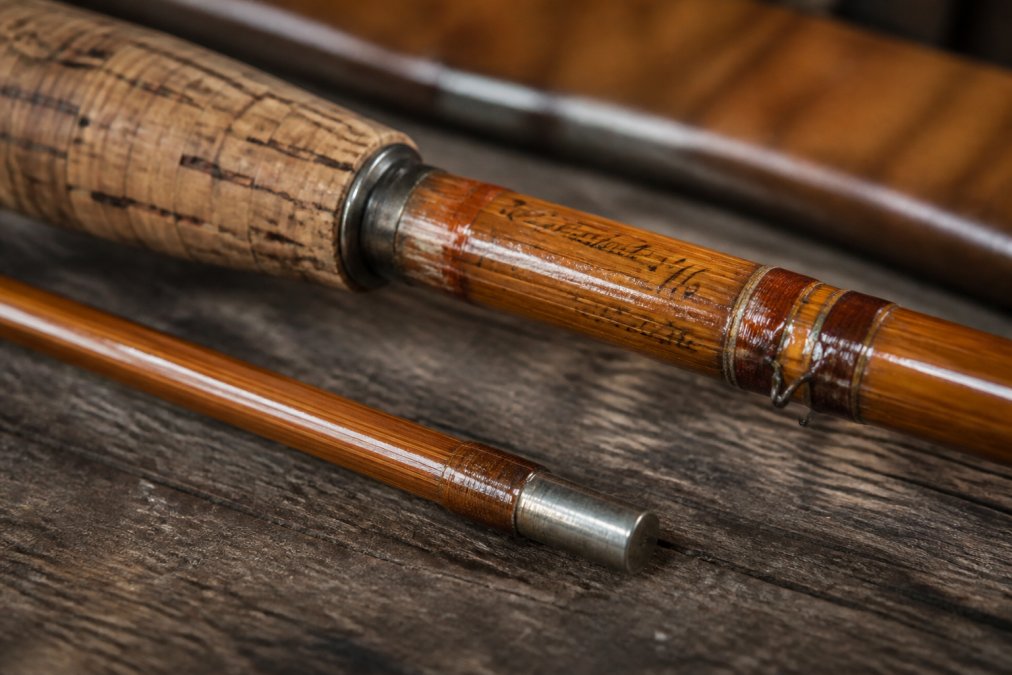
Trade rods, mass-produced blanks sold to tackle shops and rebranded with local names, often carry the retailer's name rather than the blank manufacturer's. Examining construction technique, guide wraps, and varnish finish helps identify the true maker.
Split Bamboo vs. Fiberglass Construction
Split bamboo dominated the market until the 1950s, when fiberglass began replacing it. Bamboo rods feature a hexagonal cross-section constructed from carefully selected cane strips. The natural flex and recovery of bamboo makes these rods responsive, which is why collectors still seek them out.
Fiberglass rods emerged in the 1950s as a more durable, weather-resistant alternative. Early fiberglass rods felt heavier and slower than bamboo counterparts but required less maintenance. A fiberglass rod from the 1960s is now considered vintage, though it typically costs less than an equivalent bamboo rod.
Bamboo rods show visible cane segments along the blank with a warm, golden appearance. Fiberglass blanks are uniform in color with no visible grain. A hexagonal pattern indicates split bamboo; a solid, smooth tube indicates fiberglass.
Determining the Age of Your Antique Fly Rod
Dating an antique fly rod requires examining multiple construction details. The maker mark gives you a starting point, but the reel seat style, ferrule design, and guide wrap pattern refine your estimate to within a decade or two.

Guide Wraps, Ferrules, and Reel Seat Clues
Guide wraps changed significantly over time. Early rods featured simple black or brown silk wraps with minimal overlap. By the 1930s, manufacturers used colored thread patterns. Post-1950s rods show more uniform, tighter wraps applied by semi-automated equipment.
Ferrule design is a reliable dating indicator. Older rods used simple ferrules with minimal taper; later designs incorporated more sophisticated geometry. Hardy's ferrules evolved from flat-sided designs in the early 1900s to rounded profiles by mid-century.
Reel seat construction indicates manufacturing era. Early rods featured simple wooden seats; by the 1920s, manufacturers added metal bands and locking rings. Nickel-plating, chrome-plating, or bare metal finishes help narrow the dating window.
Cork grip style provides dating clues. Older grips show visible cork ring segmentation; later grips feature more uniform application. Varnish color suggests age, though storage conditions affect this more than manufacturing date.
Common Manufacturers and Trade Rod Identification
Major manufacturers include Hardy Brothers (England), H.L. Leonard (USA), Payne (USA), Granger (USA), and Heddon (USA). Hardy rods command the highest prices, especially pre-1920 models. Leonard and Payne rods are prized for their taper design and responsive action.
Granger rods, manufactured by Spalding in Michigan, offer excellent value. Heddon rods produced quality blanks that compete with higher-priced alternatives.
Trade rods often outperform their anonymous status suggests. Researching the tackle shop's history helps identify the true manufacturer, as regional shops typically sourced from the same handful of major blank makers.
Vintage Bamboo Fly Rod Value and Appraisal
An antique fly rod's value depends on maker, age, condition, and rarity. A pristine Hardy rod from 1910 can fetch thousands of dollars; a mid-range Granger rod from the 1940s in good condition might sell for $200-$400.
Condition Assessment and Price Factors
Condition is paramount. A rod with a tight ferrule, intact varnish, and original guide wraps commands a premium. Aggressive refinishing can destroy value by removing authentic patina.
A 9-foot rod for 6-weight line is the most versatile configuration and holds value better than specialized variants.
Provenance matters. Documented history, previous owners, and notable use add narrative value.
Rarity is a double-edged sword. The collector market values rods that are both desirable and findable. A rare variant might sit unsold while a standard Hardy attracts multiple buyers.
When to Seek Professional Appraisal
Professional appraisal is worthwhile for valuable rods. Specialists can verify the maker, assess condition, and provide realistic market valuation for insurance, sale, or estate planning.
Seek appraisers who specialize in vintage fly fishing tackle.
How to Restore Antique Fly Rods Properly
Restoration requires restraint. The goal is to preserve authenticity while improving function. Over-restoration destroys value and historical significance.
Varnish Repair and Thread Wrap Restoration
Minor varnish cracks are cosmetic and part of the rod's patina. Significant damage exposing the blank to moisture requires spot-repair by a skilled restorer to preserve the original finish.
Cork Grip and Rod Tube Maintenance
Cork grips benefit from occasional cleaning with a soft brush and slightly damp cloth. Avoid soaking or harsh chemicals. A light linseed oil application can restore suppleness to aged cork.
Condition Assessment and Hidden Damage Signs
Before acquiring an antique fly rod, inspect it carefully for hidden damage. Some problems are obvious; others require a trained eye.
Building Your Antique Fly Rod Collection
Start by fishing the rods you acquire. This is how you learn what works for you and understand why certain designs became classics. A well-maintained antique rod often outperforms modern budget alternatives, and using your collection keeps you connected to fishing history.
| Restoration Task | Approach | When to Seek Help |
|---|---|---|
| Varnish cracks | Leave minor cracks alone; spot-repair significant damage | Cracks exposing the blank or affecting structural integrity |
| Loose ferrules | Gently separate and inspect for debris | Ferrule is stuck or grinding sounds present |
| Thread wrap damage | Re-wrap if fraying; leave intact if functional | Wraps are completely missing or creating casting problems |
| Cork grip conditioning | Light cleaning and linseed oil application | Grip is cracked, separating, or severely deteriorated |
| Rod tube storage | Keep horizontal in cool, dry location | Original tube is damaged beyond repair |
American Museum of Fly Fishing collection documentation
Hardy Brothers historical records and rod dating guides
Smithsonian Institution's guide to preserving vintage fishing equipment
Frequently Asked Questions
Are antique fly rods worth money?
Yes, many antique fly rods command significant value, especially split bamboo models from respected manufacturers. Rods in excellent condition with documented provenance can sell for hundreds to thousands of dollars. Value depends on age, construction quality, maker reputation, and condition. Fiberglass rods typically hold less value than bamboo. Collectible trade rods and vintage gear from the early-to-mid 20th century are most sought after by serious collectors.
How do I identify the manufacturer of an old fly rod?
Look for maker marks stamped or printed on the rod blank, usually near the grip or reel seat. Serial numbers, if present, can help date the rod and confirm the manufacturer. Check the ferrule design, guide wraps, and cork grip style, these details vary by maker and era. Research common manufacturers from the rod's apparent age. Rod tubes or original packaging often include manufacturer information. Professional appraisers can help identify unmarked or obscure trade rods.
What signs of damage should I look for when buying an antique fly rod?
Inspect the rod blank for cracks, splits, or soft spots in the bamboo or fiberglass. Check ferrules for corrosion, looseness, or damage that affects fit. Examine varnish for deep cracks, peeling, or heavy wear that exposes the blank. Look at guide wraps for fraying or missing wraps. Test the cork grip for rot, compression, or deterioration. Verify the reel seat functions smoothly. A rod with minor cosmetic wear is normal; structural damage or separation between sections significantly reduces value and casting performance.
How should I store and maintain an antique bamboo fly rod?
Store the rod horizontally or vertically in a cool, dry location away from direct sunlight and humidity extremes. Use the original rod tube if available; otherwise, invest in a protective rod case. Keep ferrules clean and lightly lubricated to prevent corrosion and sticking. Avoid exposing bamboo to prolonged moisture. If you fish with the rod, dry it thoroughly after each use and store it disassembled. Handle varnish and thread wraps gently to prevent chipping. Annual inspection for cracks or deterioration helps catch problems early.